
Why Iron Oxide-Based Pigments Behave Differently on the Skin: Chemistry, Physics and Biology of the Surface
A change in the colour of cosmetic products after application to the skin is often perceived as a defect in the formula or a shade selection error. In practice, this is the result of a complex interaction between pigments, the skin’s microenvironment, and external conditions. This is especially evident in the case of iron oxides, inert inorganic pigments that are considered the standard of stability but at the same time show a noticeable colour shift in real wear conditions. This effect becomes particularly relevant in professional cosmetic applications, including facial rejuvenation therapy, where visual colour accuracy and stability on the skin are critical.
To understand the causes of this phenomenon, it is necessary to consider it simultaneously from the point of view of pigment chemistry, particle physics, light optics and skin biology.
Iron Oxides as the Basis of Color Stability
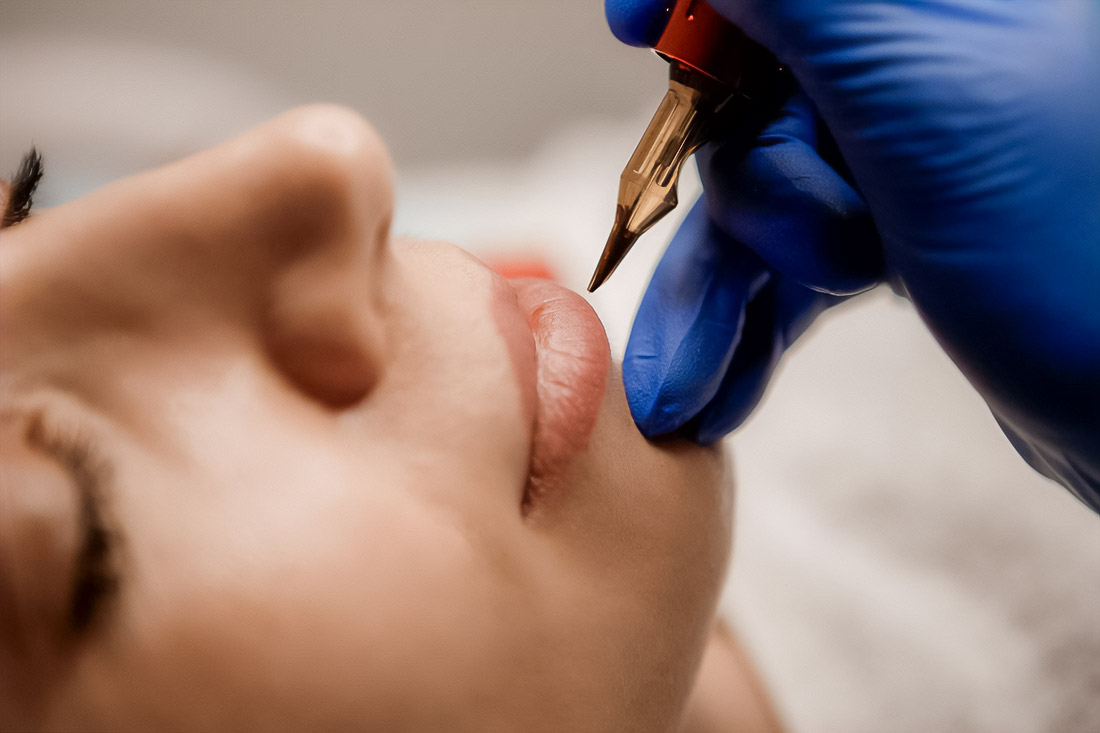
Iron oxides are compounds of iron and oxygen with high chemical inertia, photostability and resistance to ultraviolet radiation. That is why they are used as the main colour-forming components in skin products.
The method of light absorption is determined by the crystal structure: colour is formed by absorbing certain wavelengths, while the rest of the spectrum is dispersed or reflected. In this instance, many atomic layers restrict how far light can penetrate the particle. This suggests that when particle size decreases, the effective surface area involved in colour production increases.
Transparent iron oxides are characterised by particles less than 20 nanometres wide and up to 150 nanometres long, and their specific surface area reaches 80-120 m²/g. This structure provides transparency, high colour intensity, and pronounced absorption of ultraviolet and visible blue light.
Particle Size, Agglomeration and Dispersion
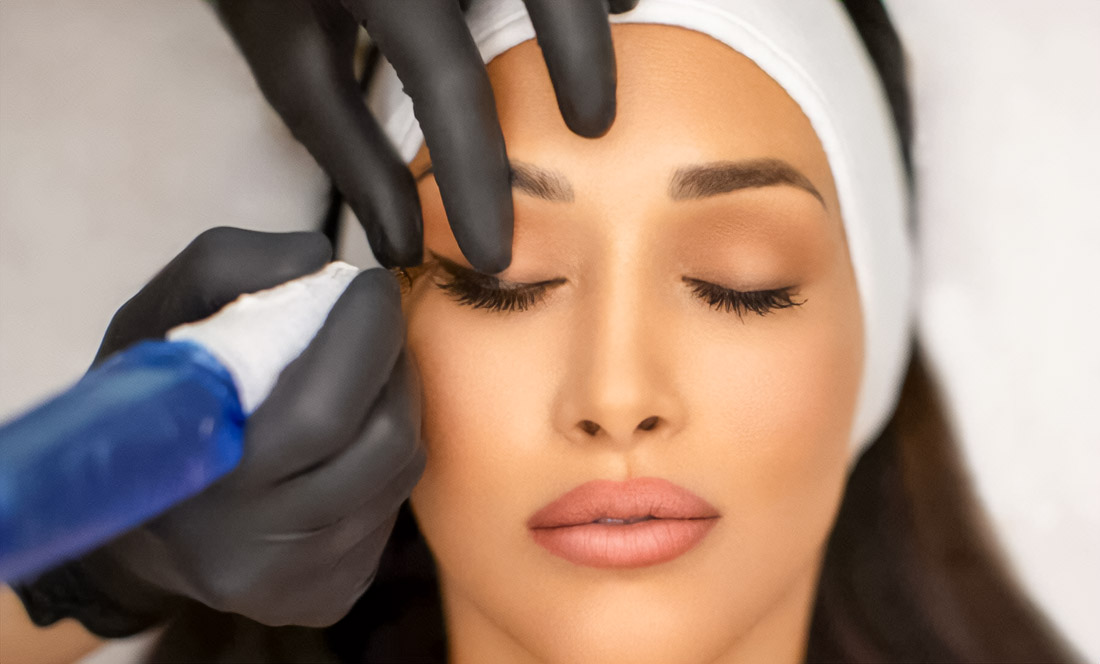
In practice, pigments rarely exist as isolated primary particles. They are subject to strong interphase forces, which cause aggregates and agglomerates to develop. Aggregates are intricately linked constructions that are challenging to demolish, whereas agglomerates are held together by weaker bonds and are amenable to dispersion.
Low dispersion leads to uneven distribution of pigment in the product film. Visually, this is manifested as a darkening of the shade and loss of transparency. That is why pigment agglomeration is often perceived as “oxidation”, although from a chemical point of view, iron oxides are already in an oxidised state.
Surface treatment of particles, such as silicone coating or encapsulation, enhances wettability, lowers surface energy, and stops re-aggregation. This directly affects the colour stability over time.
Optics: Absorption, Reflection and Scattering of Light

After applying the product to the skin, the light interacts not only with the pigment but also with the skin surface, the oil phase and the microrelief. Some of the light is reflected specularly, forming a gloss; some is diffused diffusely, creating a matte effect, and some penetrates into the pigment layer and is absorbed. These optical effects are particularly noticeable on treated skin, where surface texture and reflectivity may be altered following facial rejuvenation therapy.
The pigment’s refractive index and the surrounding conditions determine the ratio of absorption to scattering. Because iron oxides have a high refractive index, the layer’s optical density is increased. The dispersion rises with increasing aggregation or film thickness, giving the impression that the shade is warmer and darker.
The Role of the Skin as an Active Chemical Environment
The skin is not a neutral surface. It is a dynamic biological system with its own pH, temperature, and lipid composition.
The normal pH of the skin surface is in the range of about 4.5–5.5, but it can decrease locally under the influence of microbial activity, sweat and cosmetics. At the same time, the average skin temperature on the face is between 33 and 34°C, although the skin on the neck is lower, at roughly 32°C. These differences accelerate the physico-chemical processes on the face.
A range of lipids, including triglycerides and their oxidation products, can be found in skin sebum. Upon contact with the pigment film, sebum forms a lipid matrix, which:
- Enhances particle agglomeration
- Changes the refractive index of the medium
- Accelerates visual colour shift
Therefore, in areas with high sebum activity, the shade darkens faster, even if the formula and pigment remain unchanged.
Temperature and Microenvironment
Increased skin temperature increases the mobility of molecules in the oil phase and reduces the viscosity of the system. This contributes to the redistribution of pigment particles and increased agglomeration. In combination with the lowered pH and the presence of oxygen, a microenvironment is formed in which the color shift becomes noticeable after a few hours.
It is important to emphasise that this is not about destroying the pigment but about changing the optical conditions of its perception.
Protective Properties and Stability
Despite the described effects, iron oxides remain one of the most stable pigments. They are UV-resistant, effectively absorb radiation in the range of 280-400 nm, and partially shield visible blue light. This makes them an important component of formulas aimed at protecting the skin from photoaging and pigmentation.
From a safety point of view, iron oxides are substances with extremely low toxicity: their LD50 exceeds 10,000 mg/kg, and the permissible levels of occupational exposure to dust are in the range of 6-15 mg/m³, depending on regulations.
The behaviour of pigments on the skin is determined not by one factor, but by a combination of processes: particle size, degree of dispersion, optical properties, sebum of the skin, its pH and temperature. Iron oxides do not “deteriorate” and do not oxidise in the everyday sense of the word. The environment in which they work is changing, and as a result, the visual perception of colour is changing.
Understanding these mechanisms makes it possible to formulate more precisely the requirements for pigments, dispersion technologies, skin preparation and also explains why the same product may look different on different skin types and under different conditions of wear.

Hockey fan, dreamer, record lover, Swiss design-head and screen printer. Producing at the sweet spot between aesthetics and function to craft delightful brand experiences. Concept is the foundation of everything else.
A change in the colour of cosmetic products after application to the skin is often perceived as a defect in the formula or a shade selection error. In practice, this is the result of a complex interaction between pigments, the skin’s microenvironment, and external conditions. This is especially evident in the case of iron oxides,…